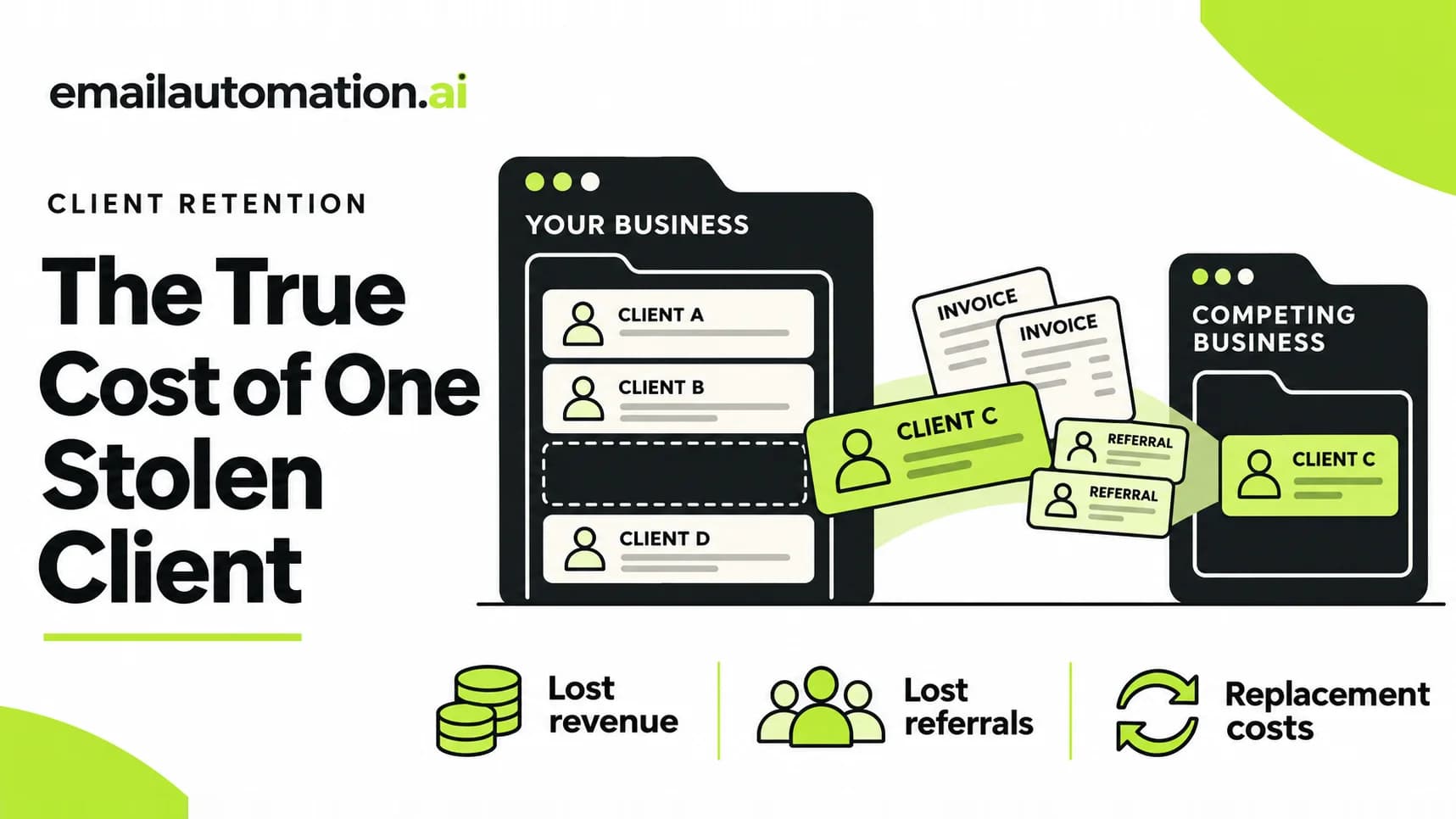




Picture this. A client tells you your old rep just offered them the same thing for 10% less. Most owners react the same way. They match it, keep the account and try to forget about it. It feels like the safe call.
It can also be the start of a bigger problem. Matching their number tells clients your old rate had room in it all along. It also hands your pricing to someone who already knows where your floor is, because they've seen it.
Below, we'll look at why ex-employees can undercut you so easily, how the pitch tends to play out and what you can do instead of starting a price war.
Why They Can Go So Low
Someone who worked on your sales team doesn't have to guess. They've seen what each client pays, which discounts got approved and how far you'd bend to keep an account. Depending on their role, they might know your costs and margins too. Some even know which suppliers you lean on.
Their overhead is usually tiny next to yours. A solo operator has no office lease, no team on payroll and no years of systems to keep running. They can take a thinner cut on every deal and still come out fine.
And think about what they don't have to do. Finding clients, earning trust, figuring out what each one needs? You already paid for all of that, in cash and in years. They just pick up where you left off. No wonder the pitch sounds convincing. They're not selling to strangers.

What the Pitch Usually Looks Like
It rarely opens with price. The first contact is friendly, maybe a quick note saying they've moved on and are now doing the same work on their own.
Price comes up after that. It's usually just below what you charge. Not a dramatic drop, only enough to make switching feel like the smart move. Seafood distributor Fortune International described this in a lawsuit against a former sales rep in Minneapolis. The company claimed he set up his own business while still on its payroll, then offered his old customers a competing salmon product priced to come in just under Fortune's (SeafoodSource).
Some bring documents along too. Medical supplier McKesson sued a former account executive who joined a competitor in Arkansas. According to the suit, he emailed dozens of confidential files to his personal account shortly before he resigned. He then allegedly used McKesson's pricing to go after his old customers. At least six longtime clients from his territory stopped buying around the time he started his new job (Arkansas Business).

Is Your Pricing Protected by Law?
Sometimes. Price lists and client lists can count as trade secrets under the federal Defend Trade Secrets Act and state law. Whether yours do depends a lot on how you treated that information before anyone walked off with it.
Courts mostly look at two things. Was the information valuable and hard to get anywhere else? And did you take reasonable steps to keep it private?
Two cases show how differently this can go. In Laro Maintenance Corp. v. Culkin, a New York appeals court sided with a building maintenance company whose former managers set up a rival business. Laro's contract pricing was built from labor, equipment and supply costs. The company had also limited which employees could see it. The court found the pair used that pricing to win Laro's customers (FindLaw).
Towne Air Freight had a very different result. A federal judge in Missouri declined to grant the transportation company a preliminary injunction in 2014. In the court's view, its customer lists and pricing weren't trade secrets because similar information could be gathered from other available sources (Epstein Becker Green).
Here's what that means for you. When every person on your team can open every price and every contact, you'll have a tough time telling a judge any of it was secret.

How to Respond Without Starting a Price War
Your first move matters more than you'd think. Here are a few options that tend to work better than an automatic discount:
- Call the client yourself. Skip the price talk at first and just check in. A lot of clients will tell you what they were offered without being asked. Then you'll know if price is the real problem or just the excuse.
- Remind them what they'd be giving up. Your team, your track record and someone to call when a rush order goes sideways. One person working alone has nobody to cover for them when they're out sick.
- Before you cut the rate, offer something else. Maybe it's faster turnaround. Maybe it's a longer contract with the price locked in. A small extra service often costs you less than knocking money off the invoice.
- Adjust selectively, if at all. If a discount really is needed, give it to the two or three accounts that are actually wavering. Everyone else can stay where they are.
- Is the pitch clearly built on your confidential data? Then get a lawyer involved. A firm letter about what the former employee signed can be enough to make them back off.

Make the Next Undercut Harder
Undercutting only works when someone knows both your clients and your prices. The fewer people who hold both, the smaller the threat gets.
Of the two, pricing is simpler to protect. Owners and senior managers usually need the full rate sheet and margin data. Your average agent? Probably just the prices for their own accounts.
Contact details matter just as much, though. After all, nobody can pitch a cheaper deal to a client they have no way of reaching. This is the part emailautomation.ai handles. Agents still email and call your clients every day. They just do it through the platform, where real addresses and numbers never show up on their screen. Contact info that clients type into their own messages gets hidden too. Access is set by role, so you decide what each person can see. When an agent leaves, they don't walk out with a ready list of who to call.

Protect the Numbers Behind Your Business
Getting your pricing right probably took years of testing what clients would and wouldn't pay. Handing that to a former rep for free makes no sense.
Curious what it looks like when your team can sell without holding client contacts? Start a free trial of emailautomation.ai today. Questions first? Contact us and we'll set up a quick demo.

More Questions About Undercutting
Can a former employee legally undercut my prices?
Charging less isn't illegal on its own. Competition is allowed. It becomes a legal problem if they built that offer on your confidential pricing or client data. Breaking a non-solicitation agreement would be a separate issue. A lawyer can tell you whether either happened.
Should I match a former employee's lower price?
Not automatically. Find out from the client what the offer actually was. A few percent off often matters less to them than reliable service and good terms.
Is my price list a trade secret?
It can be. A court will want to see that the list has real value and that you made an effort to keep it private. Restricting who can view it helps. So does labeling it confidential and mentioning it in your employee agreements.
What's the best way to keep pricing away from staff who don't need it?
Give pricing access by role. An agent handling ten accounts doesn't need rates for the other two hundred. A lot of CRMs let you hide certain fields or reports from everyone below manager level.

Sources
- Fortune sues former employee alleging misuse of trade secrets, SeafoodSource
- Medical Supply Company Files Lawsuit After Employee's Departure, Arkansas Business
- Laro Maintenance Corp. v. Culkin, New York Appellate Division, December 1999
- Customer Lists And Pricing Information Not Trade Secrets Under Missouri Law, Epstein Becker Green, July 2014
Ready to put AI to work on your emails?
Talk to AI Email Automation about your campaigns.