

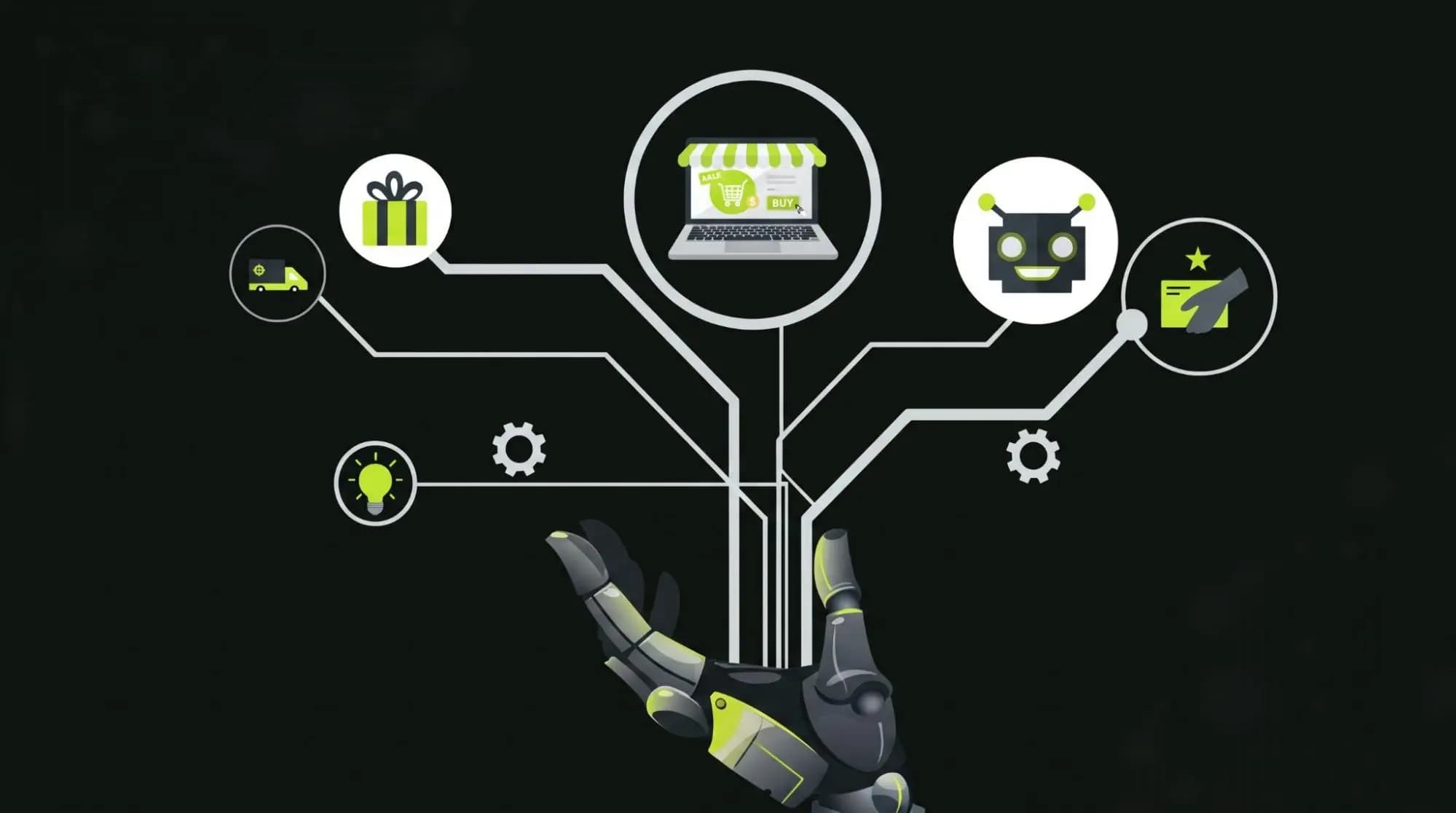
Artificial intelligence is changing how ecommerce businesses attract customers, manage online stores and process orders. It is no longer limited to large retailers with dedicated data science teams. Growing brands can now use practical AI tools through their existing ecommerce, email and customer service platforms.
The most useful AI use cases for ecommerce solve specific business problems. They help shoppers find suitable products, support buying decisions, automate repetitive work and improve planning. They can also help teams use customer and product data more effectively.
Different AI technologies support these tasks. Machine learning finds patterns in historical and real-time data. Natural language processing helps systems understand everyday questions. Computer vision interprets images. Generative AI creates text and visual content. Predictive analytics estimates what may happen next.
Businesses do not need to implement every technology at once. A better approach is to select one clear use case, measure its effect and expand only when it produces useful results. The following seven applications show how ecommerce businesses can use AI in 2026.
Quick Overview of AI Use Cases for Ecommerce
| AI Use Case | Main Ecommerce Function | Primary Business Benefit |
|---|---|---|
| Personalized recommendations | Product discovery | More relevant products and stronger order value |
| Intelligent search and visual discovery | Store search | Faster and easier product discovery |
| AI shopping assistants | Sales and customer service | Guided buying and quicker support |
| AI email and marketing automation | Acquisition and retention | Relevant campaigns delivered at scale |
| Generative AI for content | Catalog and creative production | Faster content creation |
| Predictive operations | Inventory, demand and pricing | Better planning and margin control |
| Fraud detection and AI analytics | Checkout and business intelligence | Lower risk and better decisions |
1. Deliver Personalized Product Recommendations
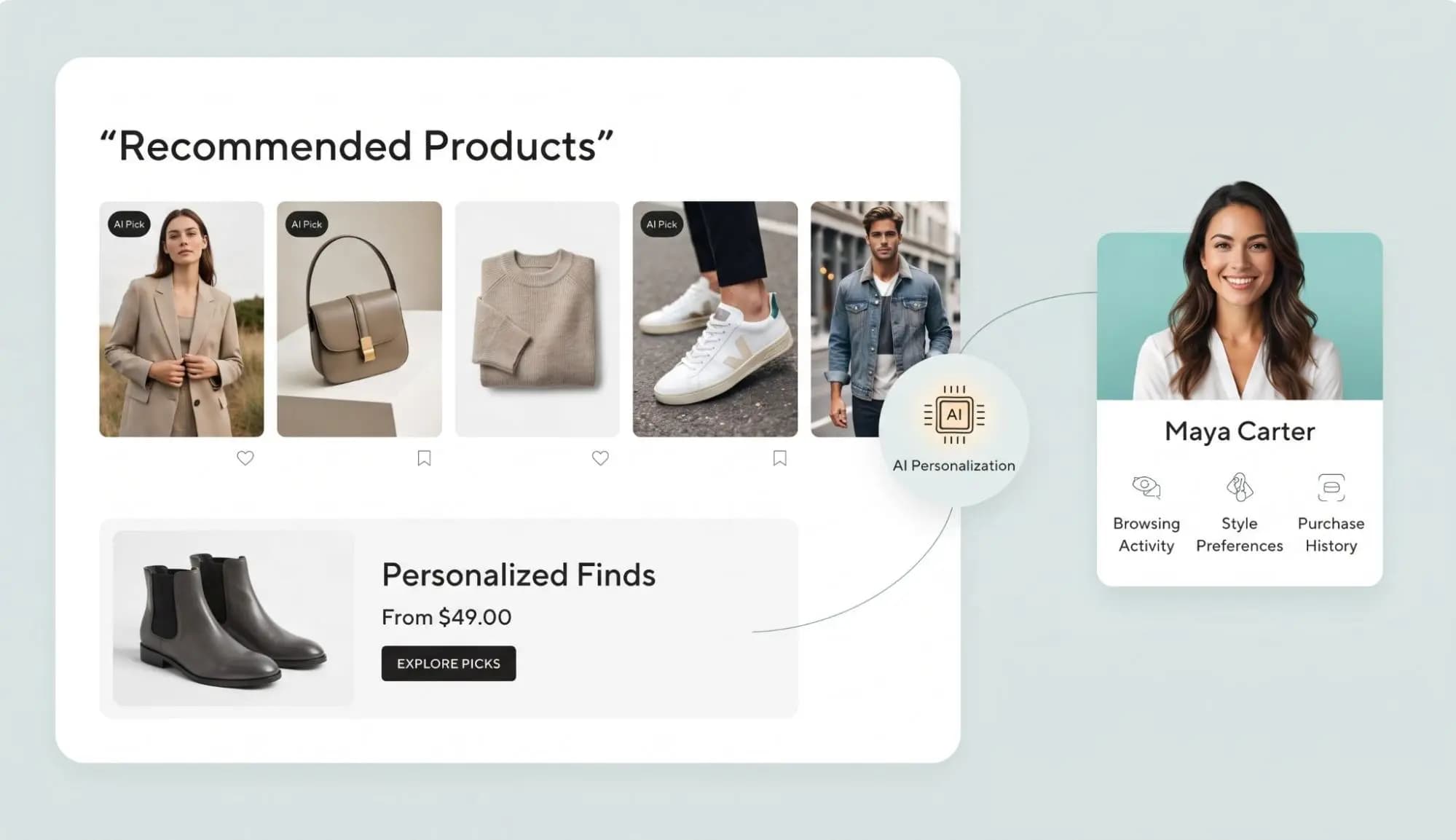
Product recommendations are among the most established AI applications in ecommerce. A recommendation system studies available customer and product data to predict which items may be useful to each shopper.
Older systems often relied on simple rules. They might display the best-selling products in a category or show what other customers bought. Modern machine learning models can consider a wider range of signals. These include recent searches, viewed products, purchase history, preferred sizes, price range, cart activity and the order in which actions took place.
This creates a more relevant experience. A customer looking at hiking boots may need socks, waterproofing products or an outdoor jacket. Another visitor viewing the same boots may have already purchased those accessories. AI can use customer data to show different suggestions instead of presenting the same products to everyone.
Use Recommendations Across the Online Store
AI product recommendations can appear at several points in the customer journey:
- Personalized products on the homepage
- Relevant items on category pages
- Similar alternatives on product pages
- Frequently bought together bundles
- Complementary products in the shopping cart
- Replenishment suggestions after a purchase
The location and purpose of each recommendation should be clear. Product page suggestions can provide alternatives. Cart recommendations should focus on helpful additions. Post-purchase recommendations can introduce related items without interrupting the original sale.
First-party data makes this process more useful. It includes information collected directly through the online store, email program or customer account. Ecommerce businesses should collect and use this information with clear consent and suitable privacy controls.
Personalization can also work for first-time visitors. The system can begin with product relationships, current page context and popular combinations. It can then adjust results as the visitor searches, clicks and adds products to the cart.
Practical example: An apparel store can recommend products based on a shopper's preferred size, viewed colors, price range and recent browsing. Someone comparing formal clothing would see different suggestions from a shopper exploring gym wear, even when both entered through the same homepage.
2. Improve Product Search and Discovery With AI
Customers often leave an online store when they cannot find what they need. Traditional search tools can make this problem worse because they depend on exact keywords. A customer may use a synonym, misspell a product name or describe a need instead of entering a product category.
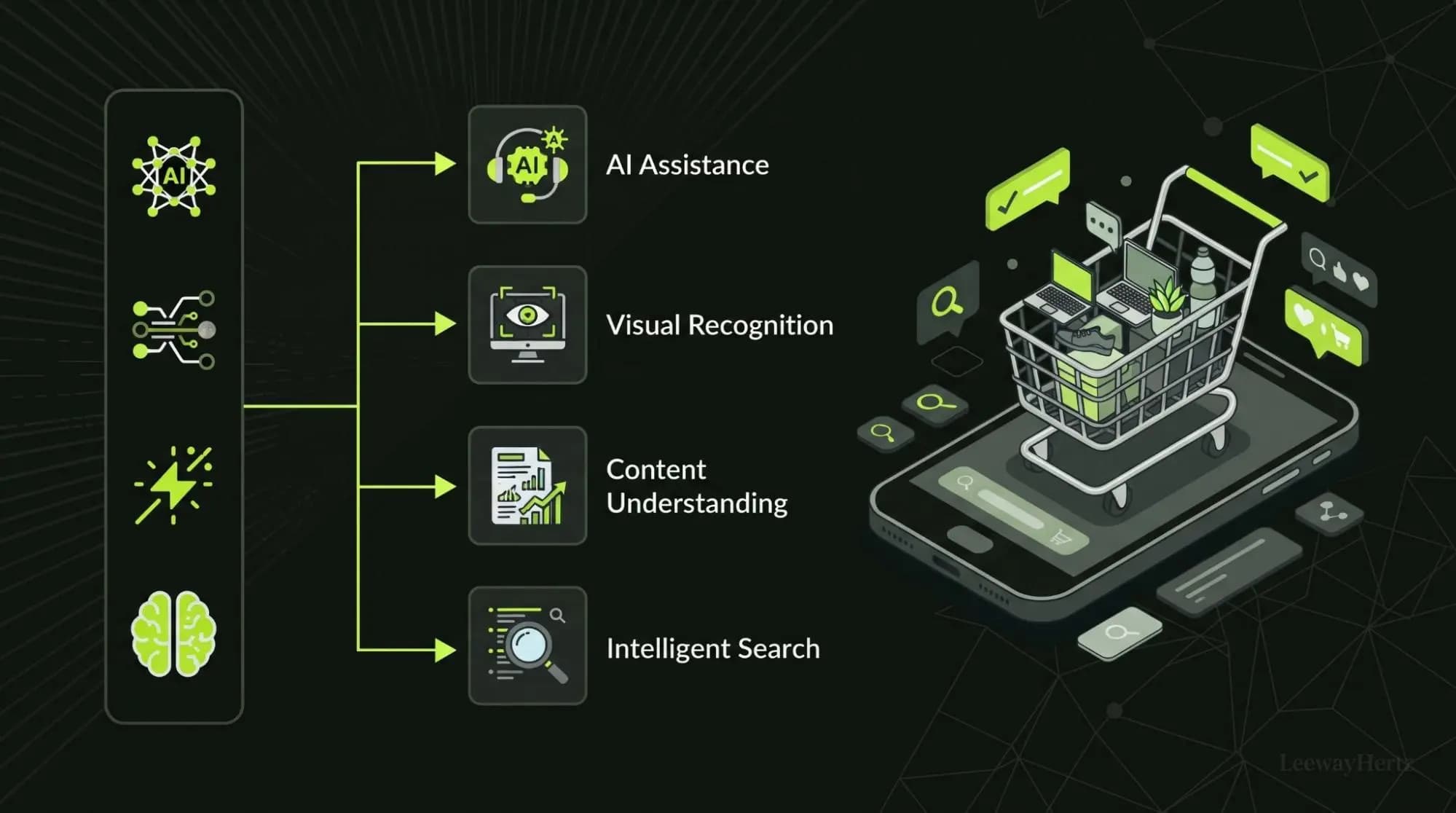
AI search for ecommerce uses natural language processing to understand intent. It looks at the meaning of a query rather than matching words alone. This allows the search engine to connect phrases such as “waterproof coat for a winter trip” with relevant product attributes, even when the exact phrase does not appear in a product title.
Make Search More Natural
Semantic search can understand synonyms, common spelling errors and conversational requests. It can also use product data such as material, size, color, compatibility, occasion and price.
An effective search system combines AI with business rules. The model can identify relevant products while the retailer controls stock requirements, restricted items, priority brands and merchandising decisions. Products that are unavailable should not appear at the top merely because they match a query.
AI-powered product discovery can also personalize how suitable results are ranked. Two shoppers may enter the same words but receive a different order based on location, previous behavior or stated preferences. The underlying catalog still matters. Incomplete attributes and unclear product names will limit the quality of any AI ecommerce technology.
Let Customers Search With Images
Visual search for ecommerce uses computer vision. A shopper uploads an image and the system finds products with similar colors, shapes, patterns or styles.
This is useful when the customer knows what an item looks like but does not know how to describe it. Fashion, home decor, furniture, jewelry and accessories are strong applications. A customer could upload a picture of a chair, handbag or jacket and browse visually related products.
Text, voice and image search are also becoming more connected. A shopper may upload a photo and add a request such as “show me a similar style in black under $100.” This gives the system more context and can produce a shorter, more useful selection.
Practical example: A shopper searches for “lightweight black shoes for a summer wedding.” Semantic search interprets the event, season, color and comfort need. It then presents suitable formal shoes instead of every product containing the words black or summer.

3. Guide Buyers With AI Shopping Assistants
Many ecommerce chatbots answer basic questions from a fixed set of rules. They can provide store hours, shipping policies or links to common support pages. An AI shopping assistant has a broader role. It can understand an open question, use current product information and guide the customer through a buying decision.
Large language models and natural language processing make these conversations more flexible. However, the assistant also needs reliable access to the product catalog, inventory, policies and customer account data. A fluent answer is not useful when the product details are wrong.
Support the Complete Shopping Journey
AI customer service for ecommerce can help with routine questions before and after a purchase. A well-connected assistant may:
- Recommend products for a stated need
- Compare features, prices and specifications
- Explain sizing or compatibility
- Check stock and delivery information
- Answer questions about shipping and returns
- Provide order status updates
- Direct complex issues to a human agent
The system should recognize when it cannot answer safely. High-value disputes, unusual returns, payment problems and sensitive complaints often require human judgment. A visible handoff process prevents the customer from becoming trapped in an automated conversation.
Businesses should also control which actions the assistant can take. Answering a product question carries less risk than changing an order or approving a refund. Permissions, confirmation steps and activity records are essential when AI tools can perform account actions.
AI chatbots for ecommerce can reduce repetitive support work and provide help outside normal business hours. The main goal is not simply to deflect tickets. It is to give customers accurate answers and help them make confident decisions.
Practical example: A customer asks for a laptop suitable for design work within a fixed budget. The AI assistant compares three available products, explains the relevant differences and checks delivery dates. It then directs the customer to the chosen product or a human adviser if the requirements are more complex.

4. Automate Email Marketing and Customer Retention With AI
Email becomes more effective when it responds to customer behavior. AI marketing automation for ecommerce can decide which audience needs a message, what content may be relevant and when the message should arrive.
Common workflows include welcome series, browse abandonment, cart recovery, post-purchase education, replenishment reminders and win-back campaigns. A rule may start the workflow, while AI improves the timing, audience or content inside it.
Businesses can use AI Email Automation to build more relevant customer journeys at scale. This approach connects customer actions with automated follow-up instead of sending the same campaign to the entire list.
Improve Segmentation and Timing
Traditional customer segmentation relies on categories chosen by a marketer. These may include recent buyers, inactive customers or people interested in a product category. Predictive analytics can find less obvious groups by examining combinations of behavior.
A model might identify customers who have visited several times, added an item to the cart and not purchased for 60 days. It can also estimate purchase probability, churn risk or likely customer lifetime value. Marketing teams can use these signals to prioritize campaigns instead of treating every subscriber equally.
Send-time optimization studies when each person usually engages. Frequency models can help limit excessive messaging. Dynamic content can adjust featured products, subject lines and offers based on the recipient's relationship with the store.
This is different from basic ecommerce automation with AI. Predictive systems recommend an audience or action. Agentic systems can complete several connected steps. For example, an agent may create a segment, draft an email, add recommended products and prepare a workflow from a short brief.
Human approval remains important. Teams should check brand tone, product claims, prices, links and promotion rules before a campaign goes live. The level of automation can increase after the system proves reliable.
Practical example: A skincare store estimates when a previous purchase may run out. The customer receives a timely replenishment email with the same product and a relevant complementary item. A different customer who has stopped engaging enters a separate win-back sequence with content based on earlier interests.

5. Create Ecommerce Content With Generative AI
Large ecommerce catalogs require substantial content. Every item may need a title, description, specifications, image text, metadata and promotional copy. Generative AI in ecommerce can speed up this production work.
AI product descriptions work best when they start with verified information. A structured product feed can provide the material, dimensions, features, intended use and care instructions. The model can then turn those attributes into readable copy without inventing the basic facts.
The same source data can support different channels. A detailed product page may need a complete explanation. A marketplace listing may have strict length requirements. Email, advertising and social media need shorter variations. AI content generation for ecommerce can adapt the message while preserving the main details.
Use AI Without Losing Accuracy
Fast generation does not remove the need for editorial control. AI can produce unsupported claims, repeated phrases or generic copy. It may also use a tone that does not fit the brand.
Businesses should provide clear instructions for voice, reading level and prohibited language. Product facts should come from an approved source. Higher-risk content should receive closer review, especially when it involves health, safety, warranties or regulated products.
AI image generation can support concepts, backgrounds and promotional creative. It should not misrepresent the actual product. Customers need accurate images when color, size, finish or included components affect the purchase.
Localization is another useful application. AI can help prepare content for different markets but direct translation may miss local meaning, units, cultural context or legal requirements. A qualified reviewer should check important customer-facing material.
Practical example: A homeware retailer imports verified attributes for hundreds of new products. Generative AI prepares distinct product descriptions, short marketplace copy and email highlights. Editors review samples and all high-value items before publication.
6. Forecast Demand and Optimize Ecommerce Operations
Customer-facing applications receive the most attention but machine learning in ecommerce also improves work behind the storefront. Predictive models can support demand forecasting, inventory planning, pricing and fulfillment.
AI demand forecasting for ecommerce examines historical sales, seasonality, promotions, stock levels and recent demand. Depending on the business, it may also use weather, location, holidays or supplier lead times. The result is an estimate rather than a guarantee. Teams should understand which factors influence the forecast and plan for uncertainty.
Improve Inventory Decisions
AI inventory management can help businesses decide what to reorder, when to reorder and where to hold stock. Better planning can reduce lost sales from stockouts. It can also limit excess inventory that may require storage or heavy discounts.
Product-level forecasts are especially useful when demand varies by size, color, store or region. A national sales total may hide the fact that one variation sells quickly in a specific location while another remains unsold elsewhere.
The forecast can also support warehouse allocation and delivery planning. Moving suitable stock closer to expected demand may shorten delivery times and reduce fulfillment costs.
Apply Pricing Optimization Carefully
AI pricing optimization can study demand, inventory, margins and promotional results. It can help businesses plan markdowns for slow products or test discounts within approved limits. Retailers should define minimum margins, excluded products and approval requirements before allowing automated changes.
Personalized pricing for individual shoppers creates trust and fairness concerns. Most businesses can gain value from inventory-based markdown planning and promotion analysis without changing prices for every person.
Practical example: An online retailer forecasts holiday demand by product and region. It increases inventory for high-demand variations, moves stock closer to likely buyers and plans earlier markdowns for slow products. Managers review the recommendations before purchase orders and price changes are approved.
7. Detect Fraud and Make Better Decisions With AI Analytics
Fraud detection is one of the longest-running AI applications in online retail. Machine learning can examine transactions as they happen and identify patterns that differ from normal customer behavior.
Signals may include order value, payment activity, shipping location, device information, account history and the speed of repeated actions. A risk score can approve a normal order, request additional verification or send a suspicious transaction for review.
The goal is not to block as many orders as possible. Strict rules can reject legitimate customers and damage conversion rates. AI fraud detection in ecommerce should reduce risk while keeping checkout simple for genuine buyers.
Turn Store Data Into Useful Insights
AI analytics for ecommerce can connect information across acquisition, browsing, cart activity, checkout and retention. It can help identify products commonly viewed but rarely purchased, customer groups at risk of leaving and stages where shoppers abandon the journey.
Sentiment analysis can organize themes in reviews, surveys and support messages. Predictive customer analytics can estimate lifetime value or the likelihood of another purchase. These insights allow teams to focus on issues and audiences with greater business impact.
AI-driven ecommerce reports still need interpretation. A model may identify a relationship without proving why it occurred. Managers should compare the result with operational knowledge and test important changes.
Controlled experiments provide stronger evidence. Businesses can compare a group using the AI feature with a similar control group. Useful measures include conversion rate, revenue per visitor, average order value, repeat purchase rate, support resolution time, forecast error and approved fraud loss.
Practical example: A new account places an unusually large order from a device connected to several failed payment attempts. The model sends it for review. A long-term customer placing a normal order can complete checkout without unnecessary verification.
How to Choose the Right Ecommerce AI Solution
The best ecommerce AI solutions are not always the tools with the most features. The right choice depends on the problem, available data and the team's ability to manage the system.
Start With a Measurable Problem
Define the result before selecting a tool. A store may need to reduce zero-result searches, recover more abandoned carts or improve forecast accuracy. A clear baseline makes it possible to judge whether AI creates a real improvement.
Check Data and Platform Requirements
AI needs reliable input. Review product attributes, customer records, event tracking and consent practices. Determine whether the solution integrates with the ecommerce platform and current technology stack.
Stores may use Shopify, WooCommerce, Magento or Adobe Commerce, BigCommerce or Salesforce Commerce Cloud. AI capabilities may come from the platform itself or connect through services built on OpenAI, Google Gemini, Microsoft Copilot, Google Cloud or Microsoft Azure. The brand name is less important than secure integration and suitable performance.
Review Control and Scalability
Ask how the tool stores and uses customer data. Review access permissions, monitoring, approval steps and human escalation. The system should handle growth in products, visitors and orders without making the workflow difficult to manage.
It should also explain its performance in terms the business can verify. A strong provider can show how the feature is tested and how results are separated from sales that would have happened anyway.
Challenges of Artificial Intelligence in Ecommerce
AI-powered ecommerce depends on more than the model. Several practical issues can limit results:
- Customer and product data may be divided across several systems.
- Incomplete catalog attributes can weaken search and recommendations.
- Privacy and consent requirements affect how data can be used.
- Generated content may be inaccurate, biased or inconsistent.
- New systems require integration, staff training and ongoing management.
- Teams may struggle to prove that AI caused an increase in sales.
These risks can be managed. Start with clean data and a narrow use case. Set rules for what the system can do. Keep human review for customer-facing content and high-impact decisions. Document performance before launch and test results against a suitable control.
Ecommerce AI Trends to Watch in 2026
The future of AI in ecommerce is moving toward connected systems that can complete more than one task. Four developments deserve attention.
Agentic Commerce With Human Approval
AI agents can plan and perform a series of actions toward a goal. An agent might prepare an email campaign, select an audience and build a workflow. Businesses will still need permissions and approval points for actions that affect customers or revenue.
Multimodal Shopping
Shoppers can increasingly combine text, voice and images. This makes product discovery more natural when a need is difficult to express through keywords alone.
Connected Customer Journeys
Unified first-party data can help ecommerce businesses coordinate website content, search, email and support. A personalized email loses value when it leads to a generic page that does not recognize the customer's intent.
AI Assistants Buying for Consumers
External AI assistants may research, compare and eventually purchase products for their users. Online retailers will need accurate product data, clear availability, consistent policies and structured information that these systems can understand.
How to Start Using AI in Your Ecommerce Business
- 1Choose one valuable problem. Focus on a clear source of lost revenue, high cost or customer frustration.
- 2Record the current result. Establish a baseline for the metric you want to improve.
- 3Check the required data. Confirm that product, customer or operational information is accurate and accessible.
- 4Run a controlled pilot. Test the solution on one audience, category or workflow.
- 5Define human oversight. Decide which outputs require review and when staff must take control.
- 6Compare results fairly. Use a control group where possible and measure incremental change.
- 7Expand after evidence. Scale the application only when it delivers reliable business value.
Build a Practical AI Ecommerce Strategy
Artificial intelligence for online retail can improve product discovery, customer support, marketing, content production and operations. It can also help businesses manage fraud and turn large amounts of store data into useful decisions.
The strongest strategy does not begin with a long list of tools. It begins with a real customer or operational problem. Choose the appropriate AI application, establish a measurable goal and keep people responsible for important decisions.
For stores focused on engagement and retention, AI-driven email workflows provide a practical starting point. They use behavior that the business already collects and connect it with timely customer communication. Once the process produces consistent results, the same test-and-learn approach can support other AI use cases for ecommerce.
Frequently Asked Questions About AI in Ecommerce
What are the most useful AI use cases for ecommerce businesses?
The most useful applications include product recommendations, semantic search, visual search, shopping assistants, email automation, content generation, demand forecasting, inventory planning, fraud detection and predictive analytics. The best starting point depends on the store's main problem and available data.
How is AI used in ecommerce marketing?
AI can segment customers, predict purchase intent, choose suitable send times, recommend products and prepare campaign content. It also supports abandoned cart, replenishment, post-purchase and win-back workflows.
Can small online stores benefit from AI tools?
Yes. Many ecommerce and marketing platforms include AI features that do not require a dedicated technical team. Smaller stores should start with a narrow application that saves time or addresses a measurable sales problem.
How does AI improve the ecommerce customer experience?
AI can make products easier to find, provide relevant recommendations and answer routine questions quickly. It can also create more timely email communication and reduce unnecessary steps during support or checkout.
What is the difference between an AI chatbot and an AI shopping assistant?
A basic chatbot usually follows rules or answers common support questions. An AI shopping assistant can interpret open requests, compare live products and guide a customer toward a purchase. Its accuracy depends on reliable access to the catalog and store policies.
What data does an ecommerce business need to use AI?
The required data depends on the application. Recommendations need product and behavior data. Forecasting needs sales, stock and seasonality records. Email automation uses customer events and consented profile information. Accurate and well-structured data improves every use case.
What are the main risks of AI in online retail?
Key risks include incorrect outputs, privacy problems, biased decisions, weak data, poor integration and excessive automation. Clear rules, access controls, human review and ongoing monitoring reduce these risks.
How can ecommerce businesses measure AI return on investment?
Businesses should compare results with a baseline or control group. Useful measures include incremental revenue, conversion rate, average order value, repeat purchase rate, support resolution time, forecast accuracy, inventory costs and fraud losses. The selected metric should match the original business problem.
Ready to put AI to work in your store?
Talk to AI Email Automation about behavior-driven email workflows for ecommerce.