



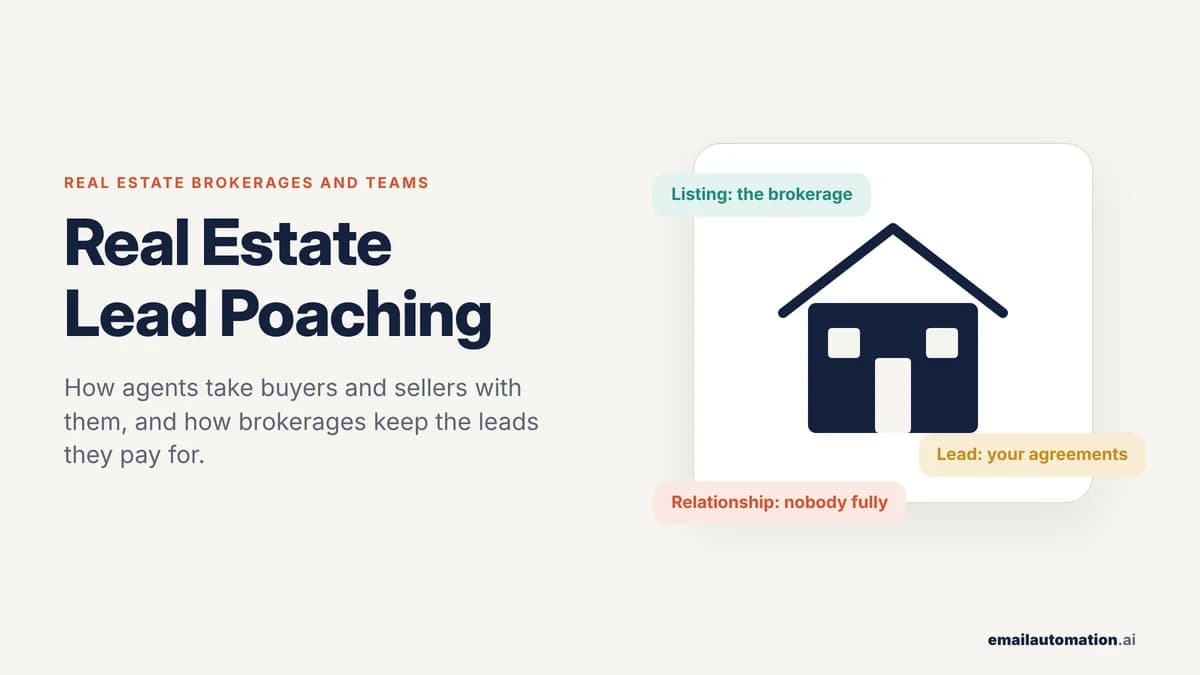
Who owns a real estate client when an agent leaves? Generally, the listing agreement belongs to the brokerage, not the agent. Leads are a different matter. Who keeps them depends mostly on what your agreements say and how your systems are set up.
That gap is where most real estate lead poaching happens. A team leader pays for portal leads, an agent works them for months and the relationship walks out with the agent. Brokerages see the same thing on a bigger scale when several agents move to a competitor together.
Below, we cover who owns what, how leads slip away, what recent cases show and how to protect the leads your business pays for.
Who Owns the Client: the Brokerage, the Team or the Agent?
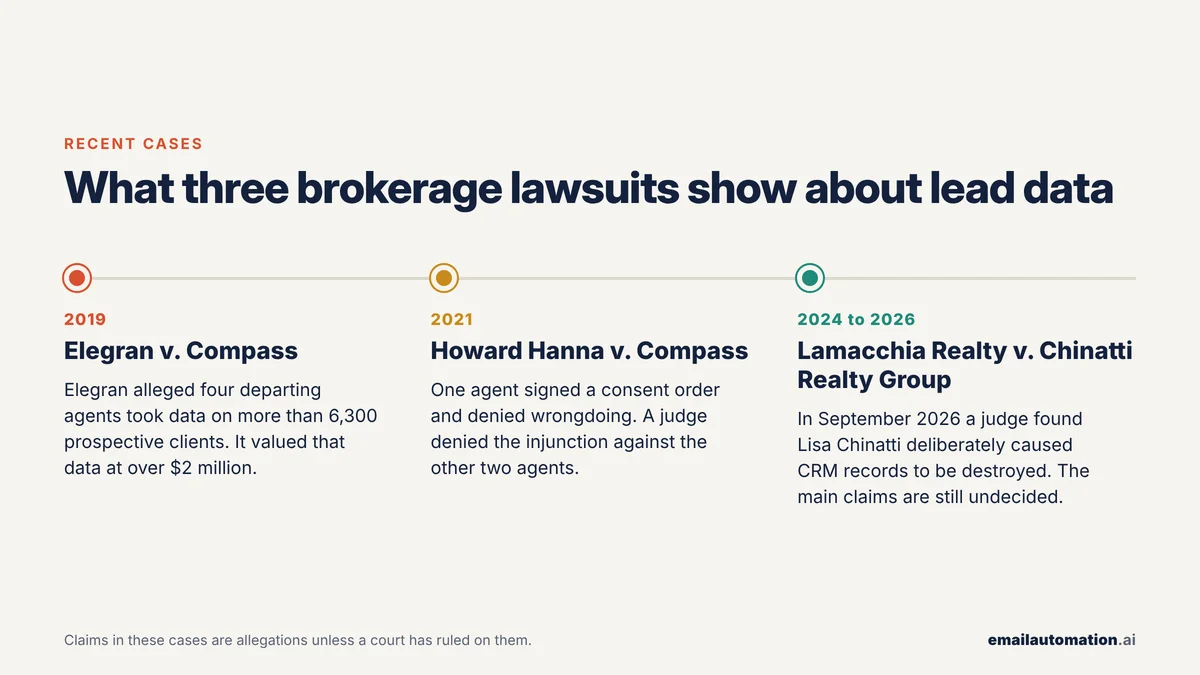
It depends on what you mean by "the client." There are really three different things in play.
- The listing. A listing agreement is a contract between the seller and the broker, not the individual agent. Arizona REALTORS, for example, advises that an agent who switches firms can't cancel those listings on their own, because cancelling needs the agreement of both the seller and the broker. The agent's independent contractor agreement usually decides what happens to pending deals and commissions (Arizona REALTORS).
- The lead. A name and number in a CRM isn't a contract, so ownership comes down to your agreements and your software settings. Take BoldTrail (formerly kvCORE). On a BoldTrail team, the team leader can own leads that are assigned to agents. If an agent leaves the team, they can't keep team-owned leads, and those leads won't appear even if the agent exports their contacts (eXp Realty support).
- The relationship. Buyers and sellers often choose a person, not a logo. Nobody can fully own that, which is why the first two need to be set up properly.
How Do Leads Leave With Agents?
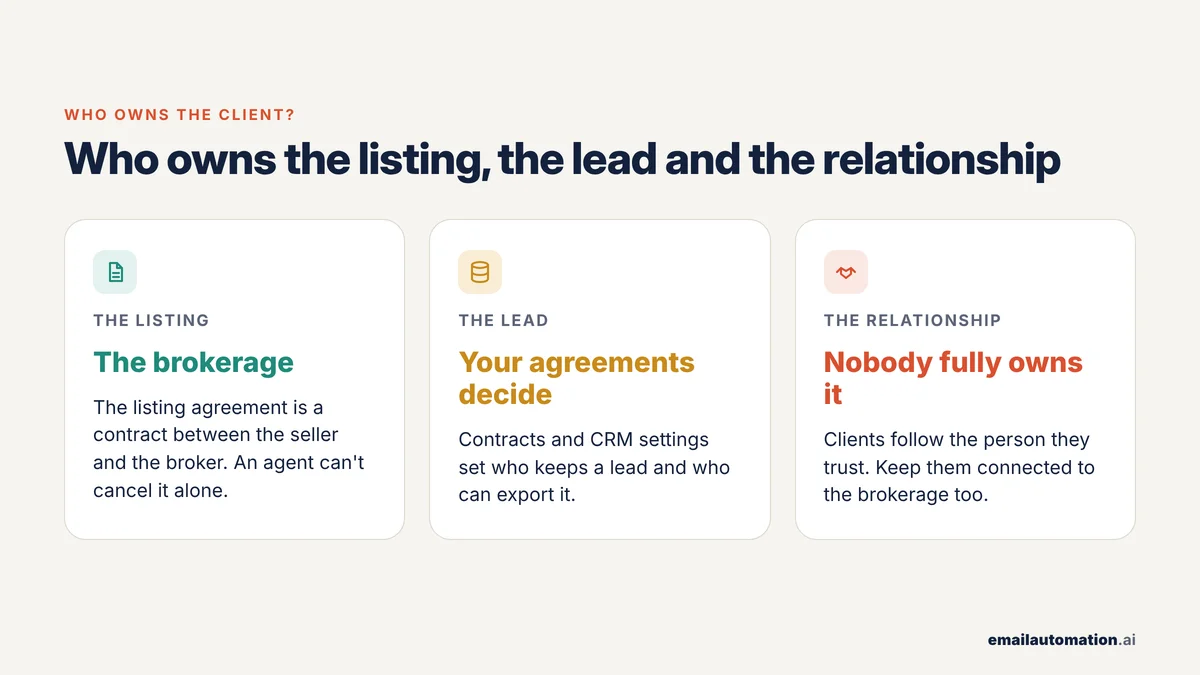
Most of it happens through ordinary tools, often weeks before anyone resigns. The general methods are in our post on how employees steal clients. In real estate, these come up most:
- CRM exports. A bulk download from Follow Up Boss, BoldTrail or another CRM before the move, including contacts the agent never worked personally.
- Calls and texts from the agent's own cell, which leave every buyer and seller in their phone
- Paid portal leads. Zillow and Realtor.com inquiries the agent has been nurturing for months, with every conversation on their personal number.
- Group moves, where several agents leave in the same week and take shared prospects along
- Talk about the old firm's future. In one lawsuit covered below, a brokerage alleged a departing agent told colleagues it was close to insolvency.
- Sphere and past client lists kept in a personal spreadsheet or email account
What Do Recent Real Estate Cases Show?
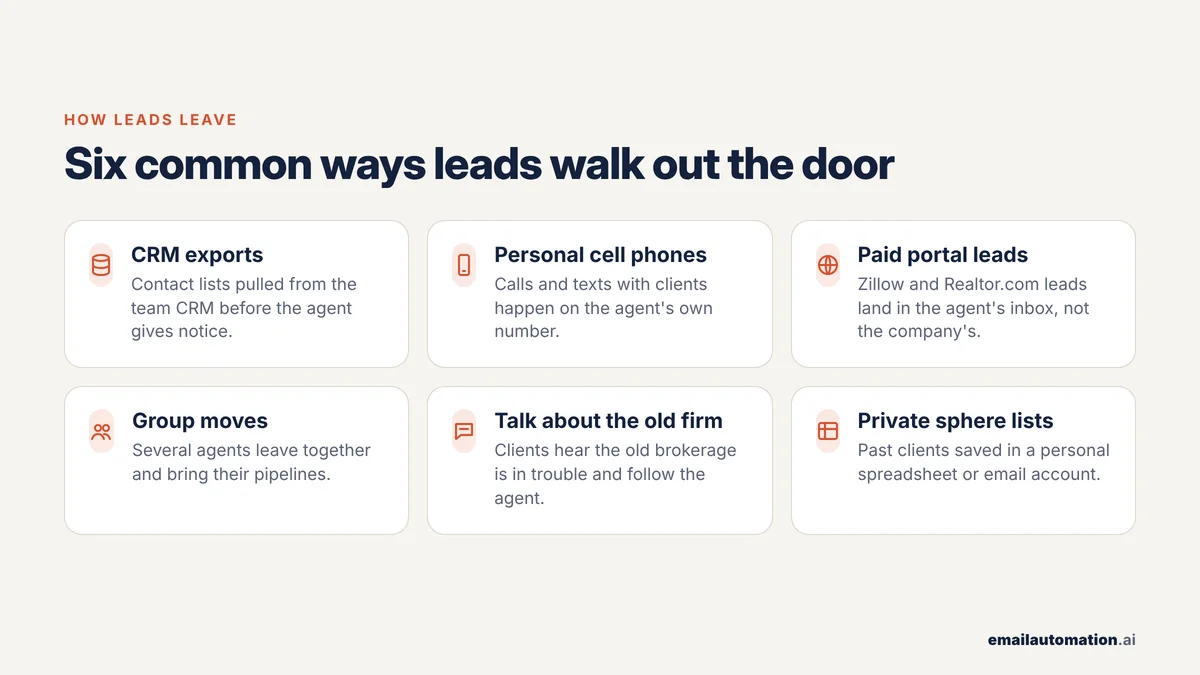
Elegran v. Compass (2019): paid leads walking out the door
New York brokerage Elegran Real Estate sued Compass and agent Zino Angelides in 2019. According to the lawsuit, Angelides and three other Elegran agents left together on June 24 and started at Compass the same day. Elegran claimed they took data on more than 6,300 prospective clients, which it valued at over $2 million. It said a substantial portion of those leads had been bought from Zillow. The suit also accused Angelides of telling colleagues Elegran was close to insolvency. Compass said competitors were using the courts to stifle competition (The Real Deal).
Howard Hanna v. Compass (2021): contracts are no guarantee
Howard Hanna alleged that Compass helped three of its former agents breach their noncompete, non-solicitation and confidentiality provisions. One agent, Michael Hornung, agreed to a consent order. He and Compass denied wrongdoing but agreed not to use Howard Hanna's trade secrets or confidential information. Hornung also had to identify any confidential information he downloaded or removed between January 1 and February 27, 2021.
The other two agents were a different story. In August 2021, a Pennsylvania judge denied Howard Hanna's request for a preliminary injunction against them "in its entirety," without giving reasons (Inman).
Lamacchia Realty v. Chinatti Realty Group (2024 to now): the other side of lead protection
This Massachusetts case shows that protecting leads can go too far. Former Chinatti agents who joined Lamacchia Realty allege Chinatti charged referral fees of 75% to 85% on company-generated leads they kept working after leaving. They also allege it monitored them so closely it treated them like employees rather than independent contractors.
In September 2026, a judge found that Lisa Chinatti "deliberately and intentionally" caused the destruction of CRM records from Real Geeks that were relevant to the case. Chinatti disputes that finding and says records were lost in a Zillow-required move to Follow Up Boss. The underlying claims haven't been decided (Inman).
The lesson for brokers: make lead terms clear and defensible. Keep your CRM records. And remember that protecting data is not the same as controlling every move an agent makes.
What Rules Apply When an Agent Leaves?
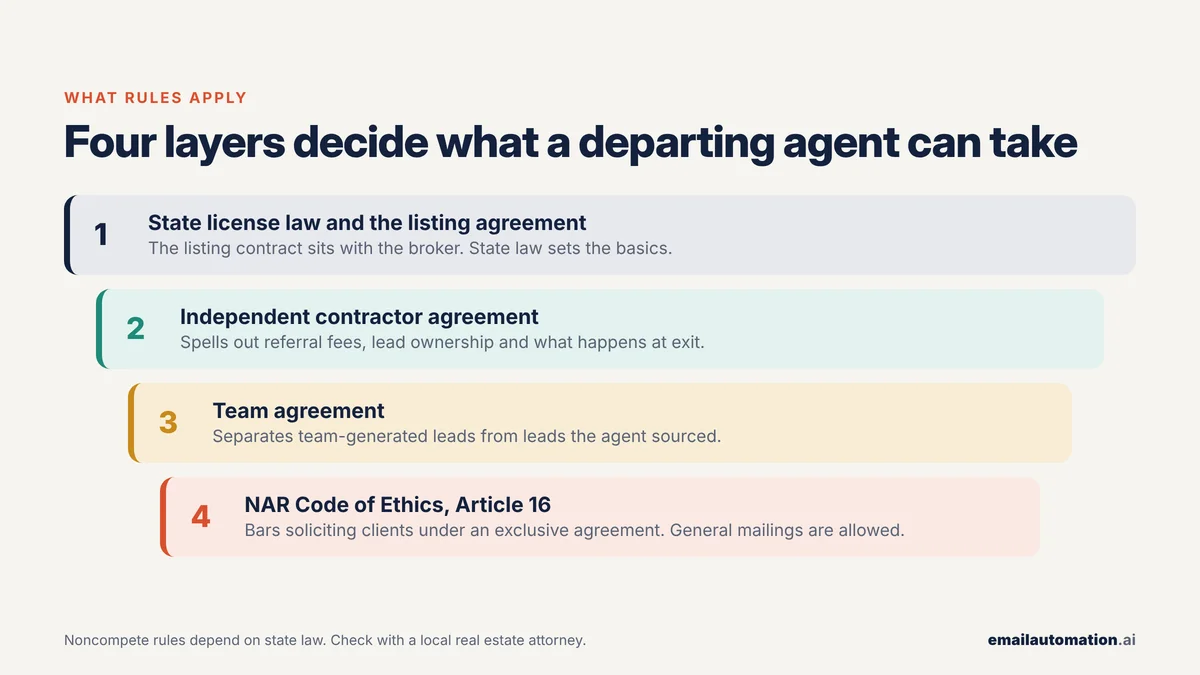
Four layers usually decide what an agent can take and who they can contact.
- State license law and the listing agreement. As covered above, listings generally stay with the brokerage unless the seller and broker agree otherwise.
- The independent contractor agreement. This is where commission splits on pending deals, lead ownership and any referral fee on company leads after departure should be spelled out. The Chinatti case shows that terms seen as unfair can end up in court.
- Team agreements. Teams should separate team-generated leads (portal, paid ads, the team leader's sphere) from leads the agent brings in personally. That split decides who keeps what.
- The NAR Code of Ethics. Article 16 says REALTORS shall not take any action inconsistent with exclusive agreements that other REALTORS have with clients. It only applies where an exclusive relationship exists. General mailings to an area are allowed, but targeting owners identified through the MLS or a sign is not (NAR). So an agent who leaves shouldn't pressure sellers still under contract with the old brokerage to break that agreement.
Noncompetes, where brokerages use them at all, depend heavily on state law and on how the agreement is written. For a wider look at where contracts help and where they stop, see our post on client theft by employees.
How Can Brokerages and Teams Protect Their Leads?
Start with paper, then back it up with systems. A few steps make the biggest difference:
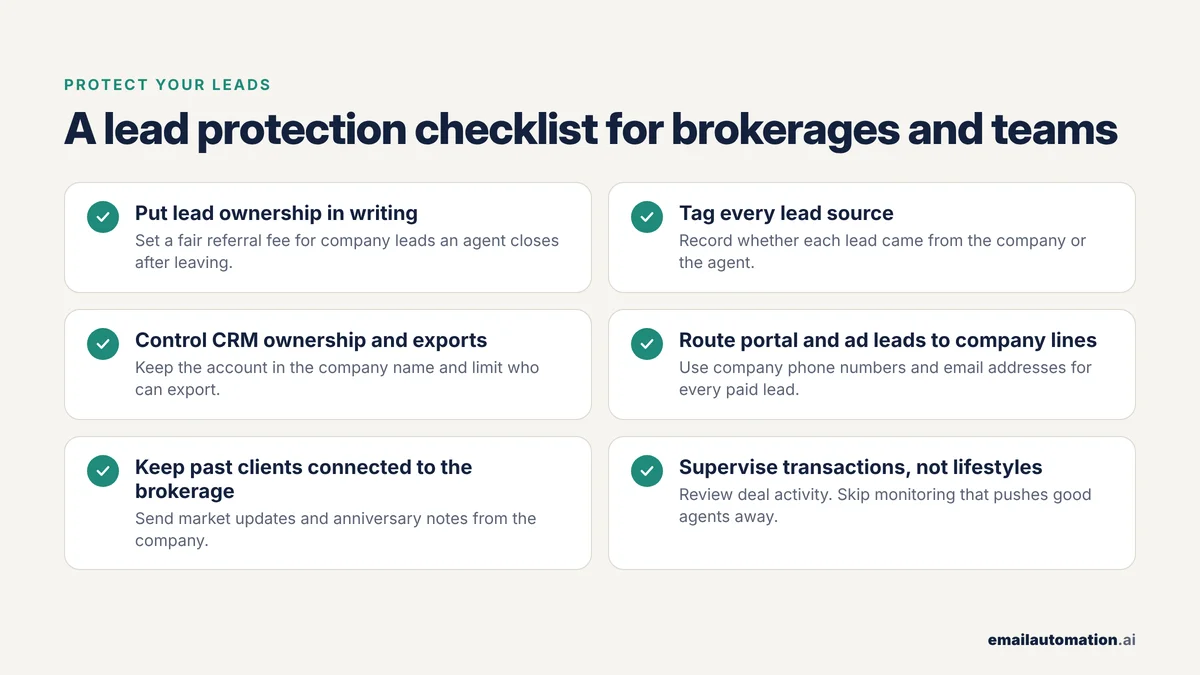
- Put lead ownership in writing. Spell out which leads belong to the brokerage or team, which belong to the agent and what referral fee applies if the agent closes a company lead after leaving. Keep the fee reasonable.
- Tag every contact with its lead source in the CRM, so there's no argument later about where a buyer came from.
- Set CRM ownership and export rights. Team leaders should own team-generated leads. Limit bulk exports to admins.
- Route portal and ad leads to company phone numbers and email addresses rather than agents' personal cells.
- Keep past clients in touch with the brokerage too, through closing gifts, market updates or annual check-ins. The relationship shouldn't belong only to one agent.
- Supervise transactions, not lifestyles. The Chinatti case shows how close monitoring of independent contractors can turn into a legal problem of its own.
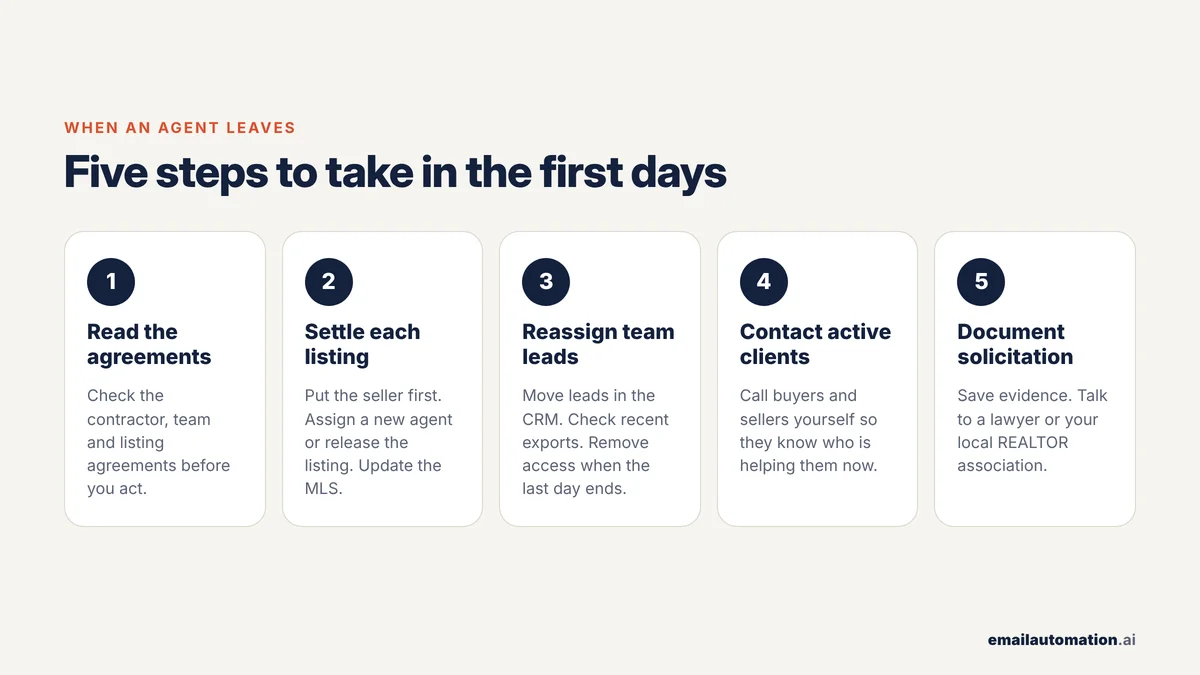
Routing communication through company systems is where emailautomation.ai helps. Agents call and email buyers and sellers through the platform, using business numbers that can be shared across the team. The client's real number and email address never show on the agent's screen.
If a buyer types a cell number into an email reply, the system hides it before the agent reads it. Brokers and team leaders set access by role. Market updates and other bulk emails go to the whole database without exposing the list.
An AI agent trained on your past conversations can also respond to new inquiries and handle routine replies and calls, which helps when a fresh portal lead is waiting on an answer. When an agent leaves, the conversations and contacts stay on the company platform.
What Should You Do When an Agent Leaves?
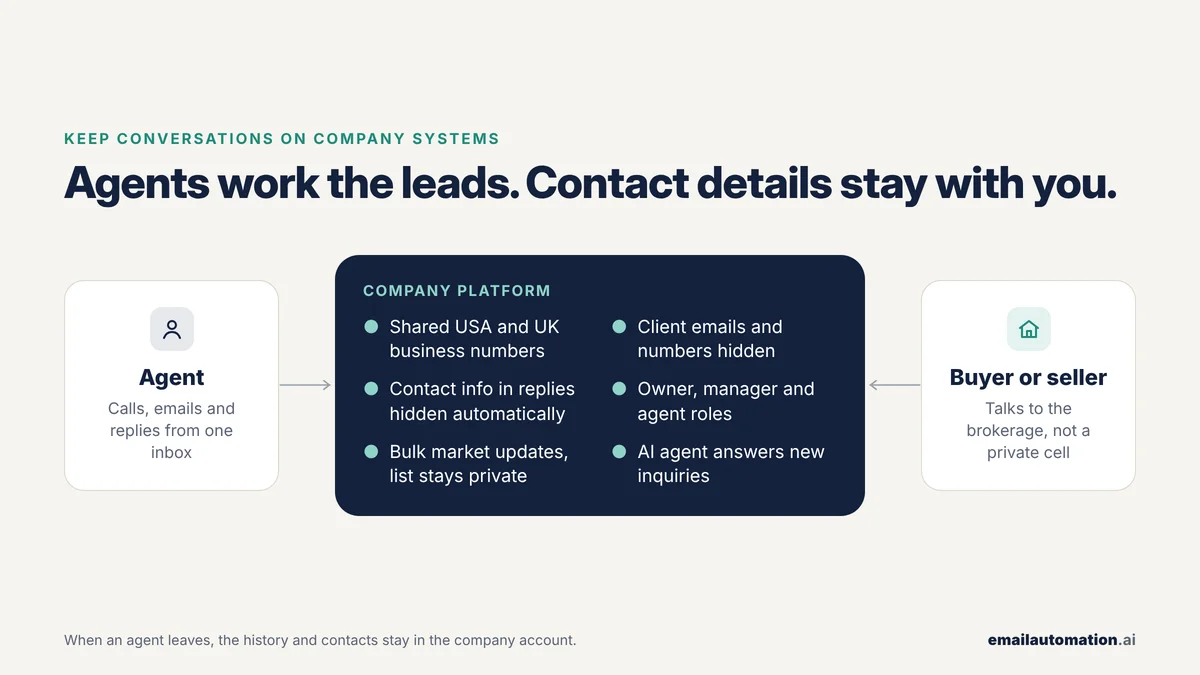
Handle it calmly and in order. A rushed reaction can hurt the clients you're trying to keep.
- 1.Read the agreements first. The independent contractor and team agreements decide commissions on pending deals, lead ownership and any referral fees.
- 2.Settle each listing with the seller in mind. Either assign another agent at your brokerage or agree a release with the seller. Make sure the MLS shows the correct listing agent once that's decided.
- 3.Reassign team leads in the CRM. Check recent exports and remove access when the agent's last day ends.
- 4.Contact active buyers and sellers yourself. A short, professional message explaining who will look after them keeps trust intact.
- 5.Document any solicitation. If a former agent targets sellers still under contract with you, keep records and talk to a real estate lawyer. An ethics complaint with your local REALTOR association may also be an option.
For early signs that an agent is preparing to leave with clients, see our post on warning signs an employee is poaching your clients.
Keep the Leads You Pay For
Every portal lead, sign call and open house sign-in costs your business money. Clear agreements and company-run communication make sure those leads build the brokerage, not just one agent's next move.
Start a free trial of emailautomation.ai and set it up for one team first. If you'd like a walkthrough, book a demo with us.
Real Estate Lead Poaching FAQs
Who owns a listing when an agent leaves a brokerage?
Generally, the listing agreement is between the seller and the brokerage, so the listing stays with the brokerage unless the seller and broker agree to release it. The agent's independent contractor agreement covers commissions on pending deals.
Can an agent take Zillow leads when they leave a team?
That depends on the team agreement and how the CRM is set up. On platforms like BoldTrail, leads owned by the team leader stay with the team when an agent leaves. Without a written agreement, ownership is much harder to prove.
Is it unethical for a former agent to contact my clients?
For REALTORS, Article 16 of the NAR Code of Ethics bars actions inconsistent with another REALTOR's exclusive agreements with clients. Targeting sellers who are still under contract with your brokerage can cross that line. Clients without an exclusive agreement are a different matter. Check the current Code and talk to your local association.
Can a brokerage charge a referral fee on leads after an agent leaves?
It can, if the agreement says so. The fee should be clearly written and reasonable. The Lamacchia v. Chinatti case shows that fees agents see as unfair can lead to a lawsuit.
Ready to put AI to work on your emails?
Talk to AI Email Automation about your campaigns.